From the ends of the earth to the heart of the world
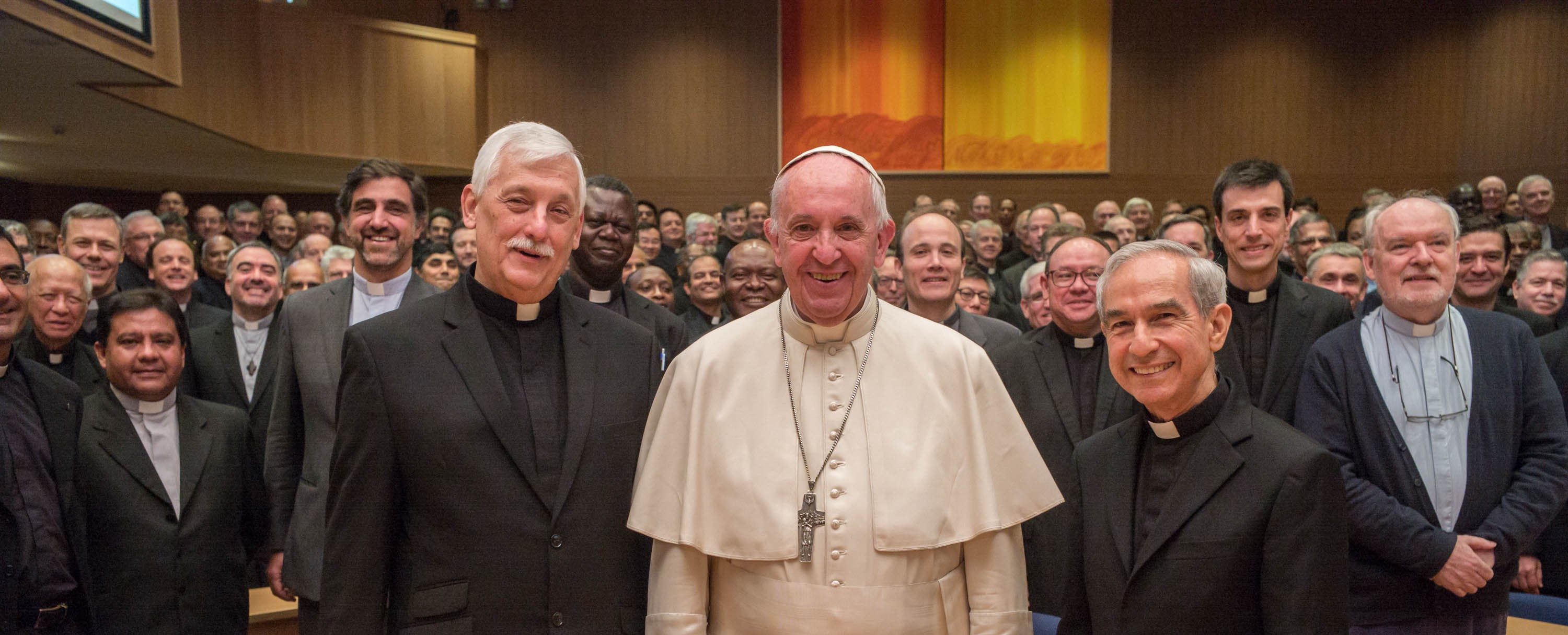
This article by Fr Dushan Croos SJ was originally published in a special commemorative issue of Jesuits & Friends in July last year, marking the papacy of Pope Francis, the first Jesuit Pope. We are reissuing it today on the first anniversary of his death.
The character of the man who stepped into the global spotlight when he became pope in 2013 was shaped by his life in Argentina, which Dushan Croos SJ surveys.
The grandparents of Jorge Mario Bergoglio travelled across the Atlantic from Genoa in Italy, seeking a better life and hoping to arrive in Buenos Aires, but their ship, the SS Principessa Mafalda, in poor condition, sank off the coast of Brazil, with the loss of the lives of about a quarter ofthe passengers. Perhaps that informs Pope Francis’ concern for the lives of so many migrants and refugees lost in the Mediterranean Sea over these last years.
His interviews with Argentinian journalists Sergio Rubin and Francesca Ambrogetti describe his first great experience of God’s mercy. Aged 17, on the feast of St Matthew (celebrated in Argentina as Student Day), he decided to start the day with a visit to his parish, San José de Flores, where he found a priest he did not know to whom he made a confession, ‘which awakened his faith and left him certain that he wanted to be, he had to be, a priest’. ‘From that moment on, for me, God is the one who “primerea”. You are looking for Him, but He looks for you first. One wants to find Him, but He finds us first‘. ’It was not only the “astonishment of the encounter" that uncovered his religious vocation, but the merciful way in which God called him, a way that would become, in the course of time, the source of inspiration forhis ministry.’ When, decades later, he was ordained bishop, and as pope, he chose as motto Miserando atque eligendo (‘having mercy on him he chose him’), taken from St Bede’s homily on the calling of St Matthew, which is read in the Office of Readings on 21September, St Matthew’s feast.
Jorge Mario Bergoglio SJ (back row, third from right) in Argentina
He entered the Jesuit novitiate on 11 March 1958, making his first vows two years later on 12 March, the anniversary of the canonisation of St Ignatius Loyola and St Francis Xavier; 55 years after entering the novitiate he would be elected Bishop of Rome of 13 March 2013. He made his final vows as a Jesuit on 22April 1973; he died on 21April 2025. Between his philosophy and theology studies, he ministered as a teacher in Buenos Aires at the Jesuit Colegio del Salvador from 1964-1966. One of his students there, Gustavo Antico, later a diocesan priest, said of him, ‘he would never order you to do something which he himself would not have done. He is a very dedicated and generous man, who listens well and has a firm character’.
Only four and a half years after his ordination as a priest, aged 37, he was appointed Provincial Superior of the Jesuits in Argentina for a six-year term, in the midst of which, in March 1976, there was a military coup in Argentina. During the dictatorship, anyone the military suspected of being a guerilla, or left-wing, was ‘disappeared’; many of them were entirely innocent, but were suspected because of their roles as students, trade unionists, or for working among the poor, such as priests, nuns and lay pastoral workers. Among these, in May 1976, were two Jesuit priests Orlando Yorio SJ and Franz Jalics SJ, detained, interrogated, tortured, and told during detention that Fr Bergoglio had denounced them; They were found five months later in a field, drugged, bound and naked. They had refused to obey after he had told them to leave the slum, but once detained, Bergoglio went to look for them. He asked a military chaplain to call in sick so he could celebrate Mass in the home of the head of the military junta and have the opportunity to ask him to release the two Jesuits. He then helped them leave Argentina for Rome. In fact, Nello Scavo’s book, Bergoglio’s List, described how he hid between 100 and 200 people suspected by the military and helped them escape.
After his term as provincial, many were hugely inspired by him and others deeply opposed to him. He was marginalised in the Argentine Province and underwent a conversion experience while in Cordoba. In Germany, studying for a doctorate, he was very much helped by contemplating a painting of Our Lady, Untier of Knots.
In 1992, the Archbishop of Buenos Aires asked for him as an auxiliary bishop, a highly unusual appointment for a Jesuit, and he later succeeded him as archbishop and cardinal. As bishop, he had particularly supported pastoral work in the slums of his diocese, and was most at ease in those parishes, and when he was created cardinal, he asked those who wanted to go with him to give the money to the service of the poor instead. In 2001, he chaired the Synod of Bishops in Rome, and in 2007 he was on the editorial committee for the Latin American Bishops’ Conference meeting in Aparecida. These experiences were developed in his papacy in his concern for those on the peripheries and his work with the synods he gathered in Rome.
Jesuits do not expect to work in the same ministry throughout our lives, but instead to learn and adapt according to the needs of the place to which we are sent. Bergoglio’s life followed that model, even in the last twelve years of his life, as Pope Francis, when most of us would be slowing down. When he was elected pope, some said he had the reputation of a man who never smiles; we learnt from his papacy that either that was wrong, or that he learned to smile very quickly! He learned from his mistakes how to respond better to those who have suffered from abuse of power or conscience, or sexual abuse, though, of course, and alas, his successor will have to develop that response further. Unlike many of us, Bergoglio was never afraid of difference; he often meditated on the maxim attributed to St Ignatius : ‘Let your first rule of action be to trust in God as if success depended entirely on yourself and not on him: but use all your efforts as if God alone did everything, and yourself nothing.’[1]As a result, he often sought to reconcile polar opposites, and to find fruit from the tension between them.
In the ministry of Jorge Bergoglio and of Pope Francis, he lived out of the experience of receiving mercy and being chosen as an instrument of mercy. For all our efforts we always discover that God is there first, and that we are invited to work with God, though the Lord will be patient with what we are able to do. That experience led him to summarise the gospel and the core of the Church’s faith: ‘Jesus Christ loves you; he gave his life to save you; and now he is living at your side every day to enlighten, strengthen and free you.’(Evangelii gaudium §165).
[1] 2ndJan: Thoughts of St. Ignatius Loyola for Every Day of the Year, From the Scintillae Ignatianae compiled by Gabriel Hevenesi, S.J. Translated by Alan G. McDougall Fordham University Press New York 2006